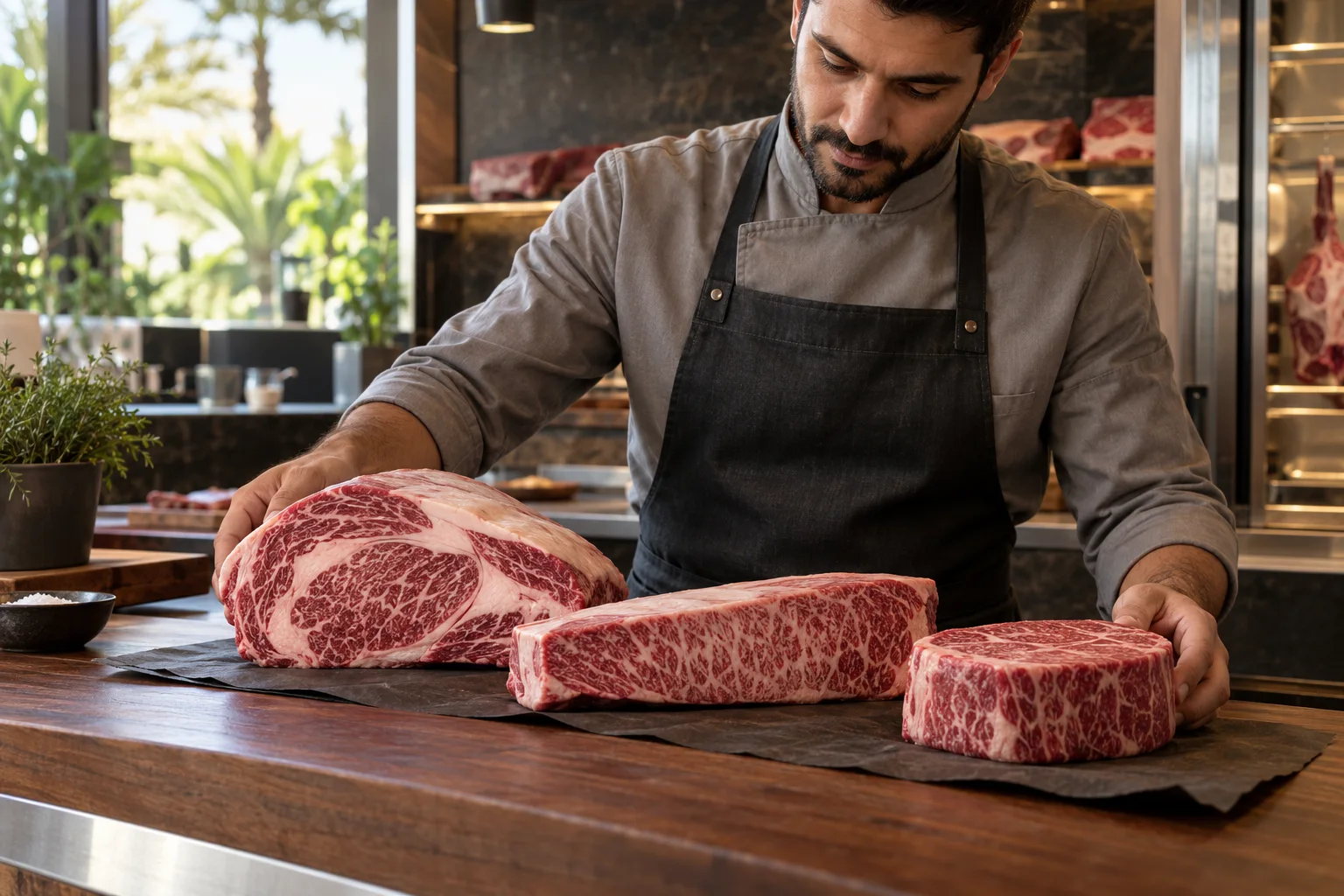
When you are buying Wagyu beef in JVC, the label is only the beginning. Origin, grading, marbling, cut and portion size all shape the eating experience. This guide explains what to look for and what to ask at the Let’s Meat counter before choosing premium Japanese Wagyu in Dubai.
01
What makes Japanese Wagyu different?
Wagyu is known for fine intramuscular fat distributed through the meat. When handled carefully, that marbling melts during cooking and creates a rich texture and deep savoury flavour. Japanese Wagyu is prized for the consistency and fineness of this marbling, but the experience still varies by cut and grade.
Because it is rich, Wagyu is often best enjoyed in smaller portions than an everyday steak. Ask the butcher to help you choose a size for tasting, sharing or serving as the centre of a meal.
Ask about the country of origin, stated grade, cut, storage guidance and current availability. Clear information matters more than a vague “premium” label.
02
How to understand Wagyu grades and marbling
Japanese beef grading combines yield and meat-quality measures. You may see labels such as A4 or A5, while marbling may also be described using a separate scale. A higher grade generally signals abundant marbling and careful quality assessment; it does not automatically mean every diner will prefer it.
If you want an exceptionally rich tasting experience, a highly marbled cut may suit you. For a larger steak portion, a slightly less intense option can offer a more balanced meal. Availability changes, so ask what is in the counter today rather than choosing by a number alone.
03
Choose the right Wagyu cut for your meal
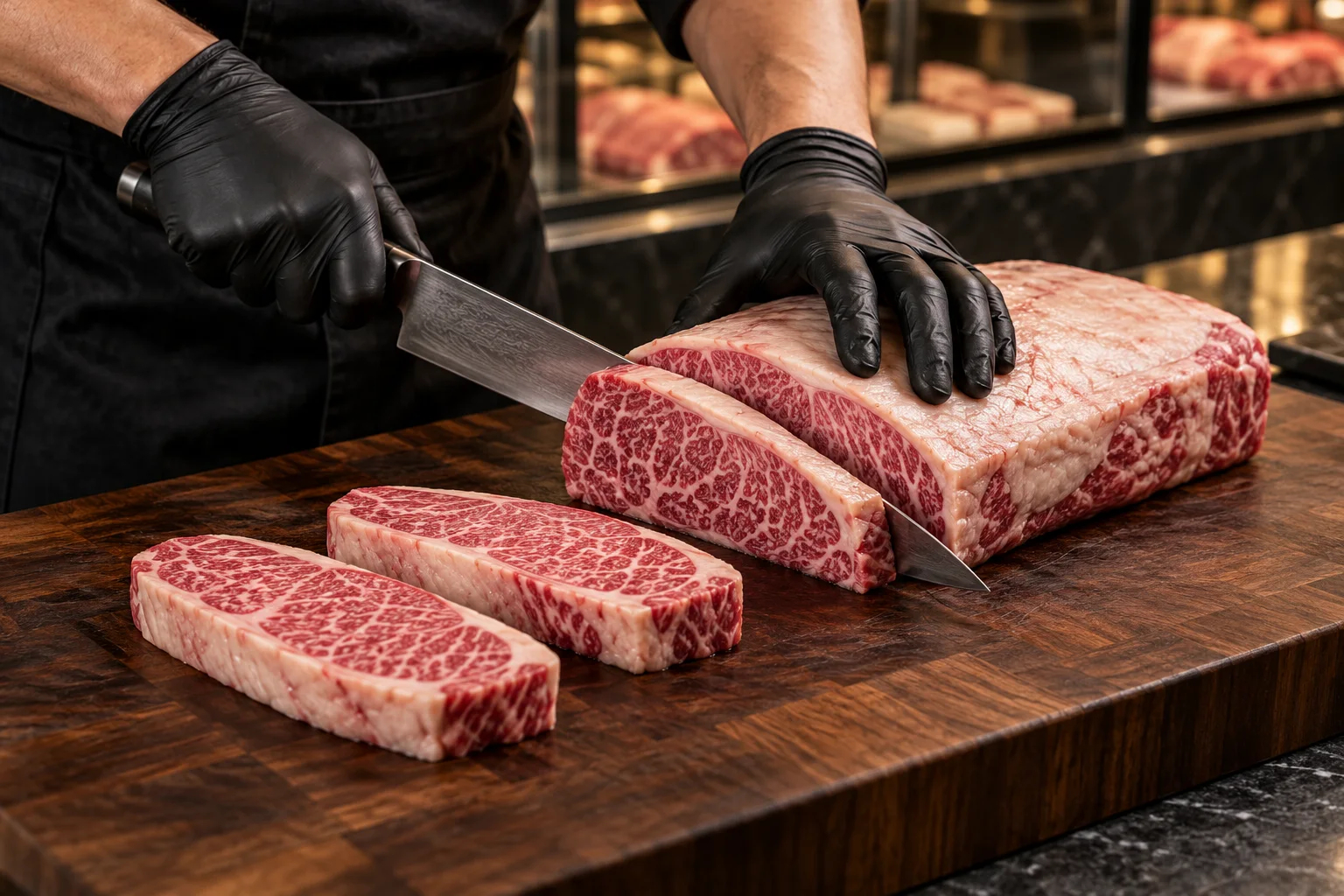
Ribeye is naturally rich and expressive, making it ideal for a special steak or small shared slices. Striploin offers a firmer bite with a clean balance of meat and fat. Other cuts can work beautifully for quick searing, yakiniku-style slices or smaller tasting portions.
Tell the butcher how you plan to cook and serve the meat. If you want a classic steak, ask for an even thickness. If you are sharing several dishes, thinner slices or smaller portions may make the Wagyu easier to appreciate.
You can also compare our Japanese A5 Wagyu striploin, A5 Wagyu yakiniku cuts and guide to choosing steak cuts in JVC.
04
Cook premium Wagyu with restraint
Richly marbled Wagyu needs a hot surface, simple seasoning and close attention. Pat the surface dry, use a heavy pan, and avoid adding excessive oil. Cook in manageable portions so the meat browns rather than steams.
- Keep the beef chilled and follow the storage advice supplied with it.
- Use a clean, properly heated pan or grill plate.
- Season lightly so the flavour of the beef remains clear.
- Cook smaller portions in batches and rest briefly before serving.
Food-safety requirements and preferred doneness should guide the final cooking time. A food thermometer is the most reliable way to check internal temperature.
05
Find premium Wagyu beef at Let’s Meat in JVC
Visit Let’s Meat in Jumeirah Village Circle to ask about Japanese Wagyu, current grades, available cuts and preparation to order. Our team can help match the portion and thickness to your plan without overcomplicating the choice.
Explore the butchery counter, discover our approach to meat, or read our fresh beef guide for steak, BBQ and home cooking. For a specific product or grade, contact us before travelling because availability can vary.
Premium Wagyu in JVC
Choose Wagyu for the experience you want.
Ask our butcher about origin, grade, cut, marbling and preparation to order.
Explore the Wagyu counter