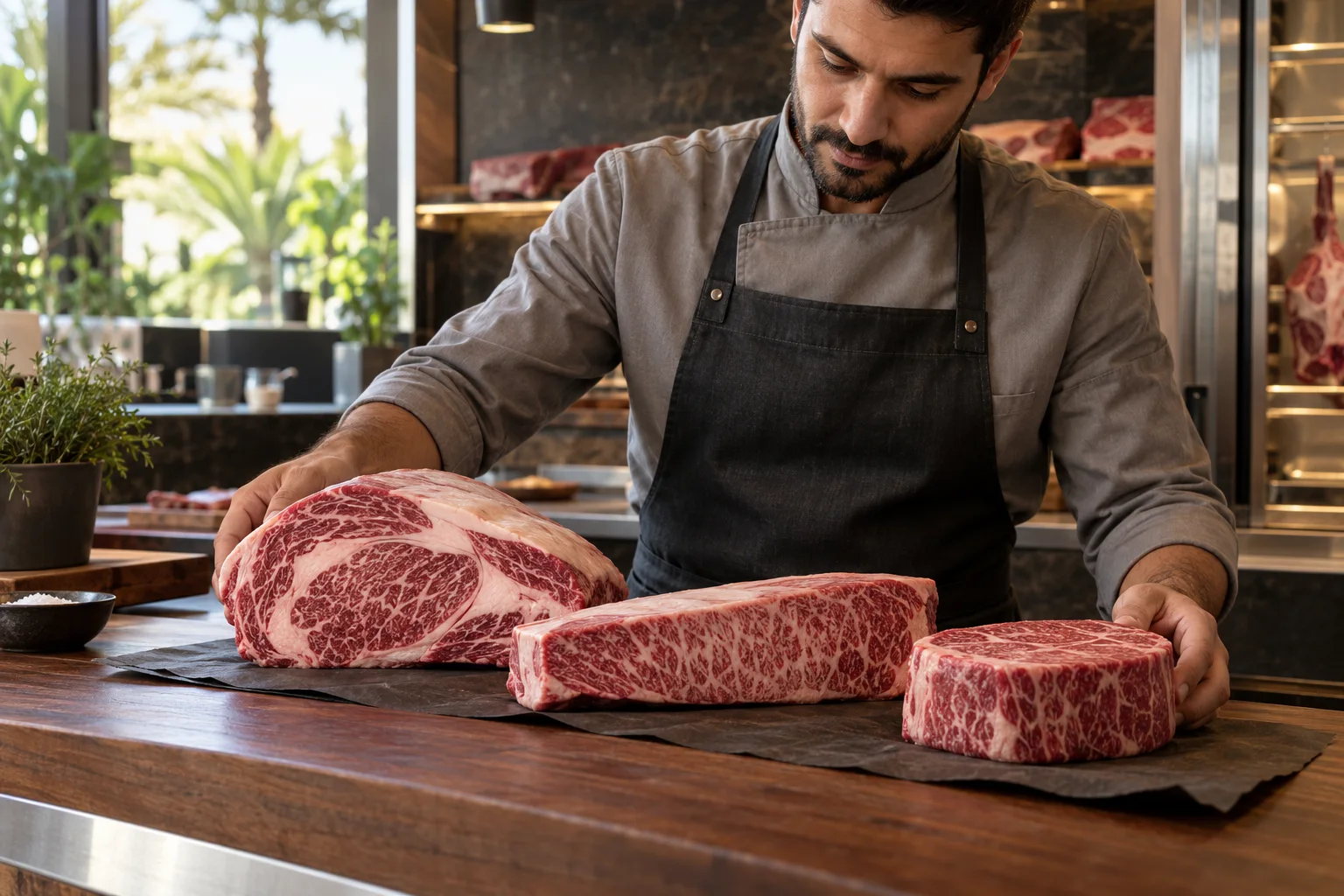
Wagyu beef is beef from Japanese cattle breeds developed for distinctive intramuscular fat, commonly called marbling. That marbling can create a rich, tender eating experience, but the word “Wagyu” alone does not tell you the country of origin, grade, cut or how heavily marbled the beef will be.
What is Wagyu beef, in simple terms?
Wagyu literally refers to Japanese cattle. In the market, Wagyu beef may be Japanese or produced elsewhere from Wagyu genetics. To choose well, check the stated origin, grading system, marbling level, cut and recommended portion instead of relying on the word Wagyu alone.
01
What does Wagyu mean?
“Wa” means Japanese and “gyu” means cattle. Genuine Japanese Wagyu comes from recognised Japanese breeds and is produced in Japan, while Australian and other Wagyu programs may use fullblood or crossbred Wagyu genetics under their own production and grading systems.
This distinction matters because labels such as Japanese A5, Australian Wagyu and Wagyu-cross do not describe the same grading framework. Origin and the named standard should appear together whenever a grade is quoted.
02
How do Japanese Wagyu grades and marbling scores work?
Japan’s carcass grade combines a yield grade from A to C with a quality grade from 1 to 5. An A5 grade therefore combines yield category A with quality grade 5; it does not mean “marbling level five.”
The Japanese Meat Grading Association assesses quality using marbling, meat colour and brightness, firmness and texture, and fat colour, lustre and quality. The final quality grade is determined by the lowest of those component grades. Japanese marbling references also use a Beef Marbling Standard from No. 1 to No. 12. See the official JMGA grading guide.
Australia uses a different system. The AUS-MEAT marble score runs from 0 to 9+, so an Australian marble score should not be treated as a Japanese A-grade. The Australian Wagyu Association explains its grading approach.
03
How should you choose Wagyu beef?
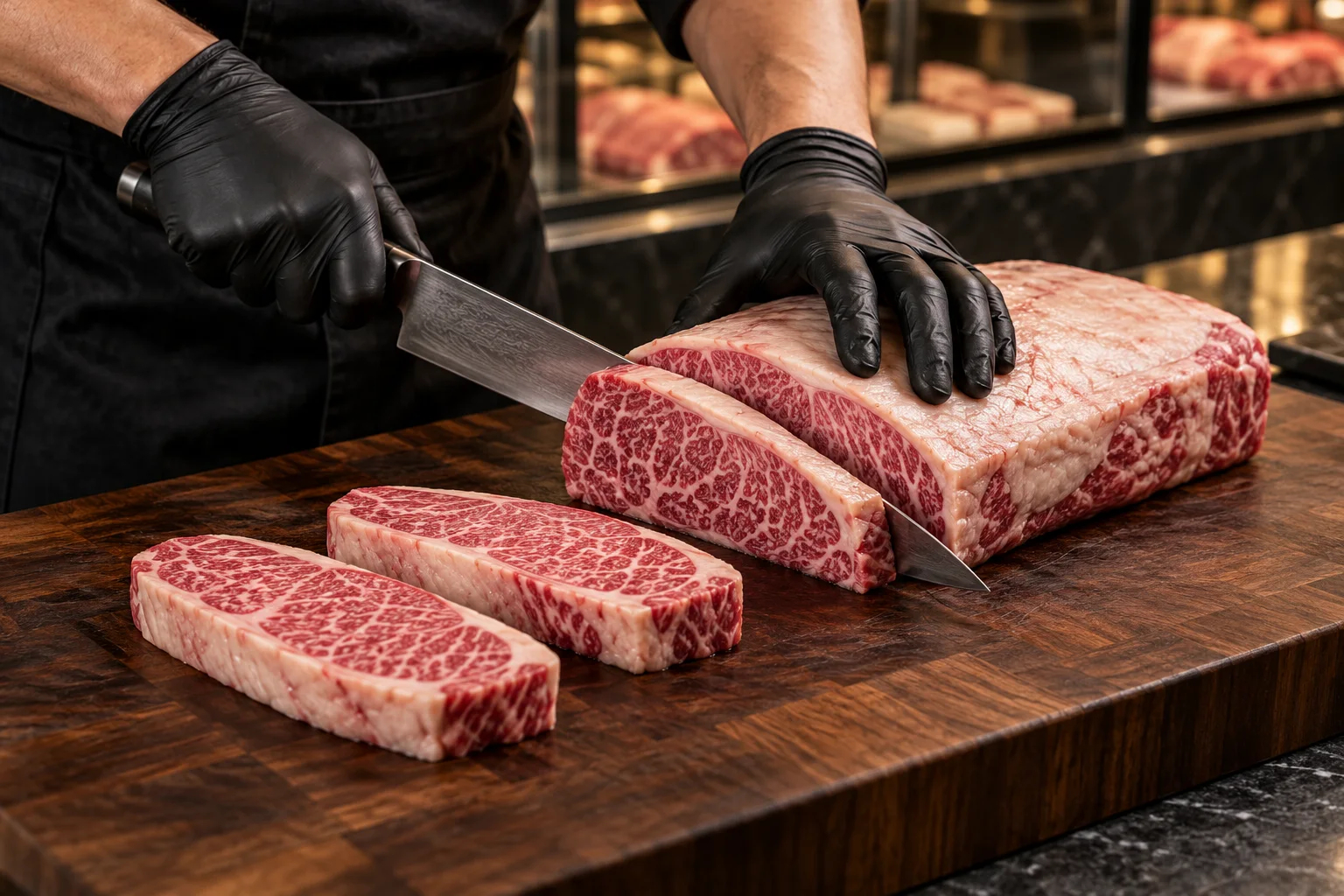
Start with the meal, not the highest number on the label. Ask where the beef was produced, which grading system is being used and whether the cut suits your cooking method. Then choose a marbling level that matches the richness you enjoy.
- Confirm the country of origin and the grading system.
- Choose the cut for the cooking method, not grade alone.
- Expect smaller portions as marbling and richness increase.
- Ask whether the quoted grade applies to the carcass or the specific product label.
- Buy from a butcher who can explain storage, slicing and cooking.
“Is this Japanese or Australian Wagyu, what grading system is shown, and which cut and portion would you recommend for a quick pan sear?”
04
Which Wagyu cut is best?
Ribeye emphasises marbling and richness. Striploin balances marbling with a firmer steak texture. Tenderloin is especially tender and usually milder. Thin slices can suit quick searing, while thicker steaks require more careful heat control.
There is no universal best cut. Choose ribeye for richness, striploin for balance and tenderloin for tenderness. Explore our Japanese Wagyu selection in JVC and guide to steak cuts.
05
How do you cook Wagyu beef?
Highly marbled Wagyu renders fat quickly, so it generally needs less added oil and smaller portions than lean steak. Use a hot pan, cook in manageable pieces and avoid overcrowding. Season simply so the beef remains the focus.
For a steak, sear the surfaces and monitor the centre carefully. For very rich Japanese Wagyu, thin slices or small portions can make the flavour easier to appreciate. Rest briefly, then serve while warm. Follow the storage and cooking guidance supplied with the product.
06
Where can you buy Wagyu beef in JVC Dubai?
Let’s Meat in Jumeirah Village Circle offers selected Wagyu and premium beef cuts when available. Visit the butchery to compare marbling, discuss portions and request preparation suited to your recipe.
Use the Google Map below for directions. You can also browse the butchery selection, read our guide to the premium butchery in JVC or contact the team about today’s Wagyu availability.
07
Frequently asked questions about Wagyu beef
Is all Wagyu beef A5?
No. A5 is one grade in the Japanese system. Wagyu can have other Japanese grades or be produced and graded in countries such as Australia.
Does more marbling always mean better Wagyu?
More marbling usually means greater richness, but preference matters. Cut, texture, portion and cooking method are also important.
What is the difference between Wagyu and Kobe beef?
Wagyu is the broader category. Kobe beef is a protected regional brand of Japanese Wagyu that must meet specific origin and certification requirements.
Can Wagyu be cooked like a normal steak?
Yes, but highly marbled Wagyu renders fat quickly. Use controlled heat, little added oil and a smaller portion.
Wagyu beef in JVC
Choose Wagyu by origin, grade and cut.
Ask our butcher about today’s Wagyu selection, marbling, portions and preparation.
Explore the butchery